

THE TIER-1 ENGINEER
ENGINEERING AND MANUFACTURING
SIMPLIFIED

The process excels at producing large, lightweight, thin-walled parts with good cosmetic quality on one side and relatively low tooling cost. Common applications include packaging trays, blister packs, appliance liners, refrigerator interiors, automotive interior panels, medical trays, and point-of-purchase displays. These parts are typically produced in the thousands to hundreds of thousands, where injection molding tooling cost or lead time cannot be justified.
Thermoforming equipment generally consists of a sheet clamping system, a heating station, a forming station using vacuum and or pressure, a cooling stage, and a trimming operation. Tooling is typically aluminum or composite rather than hardened steel, which keeps cost and lead time low but limits precision and durability.
Thermoforming performs best when it is selected intentionally and designed honestly. Most production issues trace back to designs that assume injection-molding behavior from a process that fundamentally does not behave that way.
TOLERANCES
AND FITMENT
When mechanical parts come together in an assembly, their dimensions must work together in predictable ways. A shaft must slide into a hole, a bearing must press into a housing, and a fastener must pass cleanly through clearance holes before threading into its mating part. These relationships are controlled through tolerances and fits, which determine how components interact when manufactured and assembled.
In production environments, the exact size of every feature will vary slightly from part to part. Even highly capable manufacturing processes cannot produce perfectly identical components. Engineers account for this variation by defining acceptable dimensional ranges and designing mating features so that assemblies function correctly even when those variations occur.

The relationship between these allowable variations determines the fit between parts. Some applications require loose fits that allow components to move freely, while others require tight interference fits that permanently lock parts together. Choosing the right fit is essential for achieving the intended performance of a product, whether that means smooth rotation, precise alignment, or structural rigidity.
Understanding tolerances and fitment allows engineers to design assemblies that work reliably in the real world. The goal is not simply to make parts as precise as possible, but to define tolerances that balance performance, manufacturability, and cost. Overly tight tolerances can drive up production difficulty and expense, while overly loose tolerances can lead to vibration, misalignment, or premature failure.
The sections below introduce the basic core concepts behind tolerance specification, common fit classifications, and the practical considerations engineers use to ensure that parts assemble correctly and perform as intended.
TYPES OF FIT
When two components are designed to mate together, the relationship between their tolerances determines how tightly they will fit during assembly. Engineers classify these relationships into several general categories known as fit types. Each type of fit is selected based on how the parts must behave when assembled.
Some components must slide freely with minimal friction, such as pins or shafts that rotate inside bearings. Other applications require extremely tight fits where parts are pressed together to create a permanent mechanical connection. By controlling the tolerances of mating features, engineers can reliably achieve the desired assembly behavior.
The three most common fit categories used in mechanical design are clearance fits, transition fits, and interference fits.
A clearance fit occurs when the largest possible shaft is still smaller than the smallest possible hole. This guarantees that the parts will always have a gap between them when assembled.
Clearance fits allow parts to slide or rotate freely relative to each other and are commonly used in mechanisms where movement is required. Examples include bolts passing through clearance holes, rotating shafts supported by bushings, or removable pins used in mechanical assemblies.
Because there is always space between the mating features, clearance fits are generally the easiest to assemble and are tolerant of small manufacturing variations. However, excessive clearance can lead to vibration, noise, or misalignment if not properly controlled.
CLEARANCE FIT

A transition fit occurs when the tolerance ranges of the shaft and hole partially overlap. Depending on the exact sizes produced during manufacturing, the parts may assemble with either a small clearance or a slight interference.
Transition fits are used when precise alignment between parts is important but permanent locking is not required. These fits often require light tapping or gentle pressing during assembly, but they can still be disassembled if necessary.
Common examples include locating dowel pins, precision alignment features, and assemblies where accurate positioning is more important than free movement.
TRANSITION FIT

An interference fit occurs when the smallest possible shaft is still larger than the largest possible hole. This means the parts must deform slightly in order to assemble, typically requiring a press, thermal expansion, or specialized tooling.
Interference fits create a very strong mechanical connection between components. Because the parts are tightly locked together, they resist rotation and movement once assembled.
These fits are commonly used for press-fit bearings, gears mounted on shafts, and structural components that must remain rigidly fixed during operation. While interference fits provide excellent strength and alignment, they require careful control of tolerances and assembly methods to avoid damaging the parts.
INTERFERENCE FIT

TYPES OF TOLERANCES
Tolerances can be expressed in several different ways on an engineering drawing, and the format used directly affects how a dimension is interpreted and controlled. While all tolerances define an allowable range of variation, the way that range is presented can influence manufacturing decisions, inspection methods, and how variation is distributed around a nominal value.
In practice, different tolerance formats are used depending on the function of the feature, the manufacturing process, and how critical the dimension is to overall part performance. Some tolerances are centered around a nominal value, while others are biased in one direction or defined entirely by upper and lower limits.
Understanding these formats is important because they communicate more than just allowable variation. They indicate how a dimension is expected to behave in production, how it will be measured, and where variation is acceptable or restricted.
An equal bilateral tolerance allows a dimension to vary equally above and below the nominal value.
In this case, the feature may vary between 24.95 and 25.05. This is one of the most common tolerance methods because it is simple to understand and easy to apply in many situations.
Equal bilateral tolerances are frequently used for non-critical dimensions where the exact direction of variation does not significantly affect the performance of the part.
EQUAL BILATERAL

An unequal bilateral tolerance allows different amounts of variation above and below the nominal dimension.
This format is used when the function of the part favors variation in one direction more than the other. For example, a hole may need extra clearance but cannot become too small without preventing assembly.
Unequal tolerances allow engineers to control dimensional variation more carefully while still maintaining manufacturability.
UNEQUAL BILATERAL
UNILATERAL
A unilateral tolerance allows variation in only one direction from the nominal dimension.
This means the feature may become smaller than the nominal size but cannot exceed it. Unilateral tolerances are commonly used when exceeding a dimension would interfere with assembly or cause functional problems.
For example, a shaft that fits into a bearing housing may be allowed to be slightly smaller than nominal but cannot become larger than the maximum allowable size.

LIMIT
Limit tolerances define the maximum and minimum allowable dimensions directly instead of specifying a nominal value with a plus/minus tolerance.
This format clearly defines the acceptable range of variation and removes any need to calculate the upper and lower limits. This convenience comes at the cost of an unknown nominal dimension.
Limit tolerances are often used in precision manufacturing environments where inspectors need to quickly verify whether a feature falls within the allowed range.

REFERENCE
A reference dimension is a value shown on a drawing for informational purposes only. It does not control manufacturing and is typically derived from other dimensions already defined elsewhere on the drawing.
Reference dimensions are often placed in parentheses to indicate that they are not driving the design.
These dimensions are commonly used to provide convenient measurements for inspection, assembly understanding, or overall size awareness without introducing redundant tolerances into the drawing.

BASIC
A basic dimension is a theoretically exact value used in conjunction with geometric tolerances. Unlike standard dimensions, basic dimensions do not include a direct tolerance because the allowable variation is controlled by a GD&T feature control frame.
Basic dimensions are typically displayed within a rectangular box.
Basic dimensions are most often used when defining the exact location of features such as hole patterns, slots, or surfaces relative to datums. The geometric tolerance then defines how much variation from that perfect location is allowed.

GEOMETRIC
Geometric tolerancing controls the shape, orientation, or location of features using standardized symbols rather than simple dimensional limits. Instead of specifying only the size of a feature, geometric tolerances define how accurately that feature must align or relate to other features on the part.
Geometric tolerances are typically displayed using a feature control frame, which contains the geometric tolerance symbol, the allowable variation, and the reference datums used to define the requirement.
In this case, the position of a feature must remain within a specified tolerance zone relative to the referenced datums.
Geometric tolerancing is commonly used to control conditions such as flatness, perpendicularity, concentricity, and positional accuracy. These controls are especially important in precision assemblies where the relationship between features affects alignment, sealing, rotation, or structural performance.
Because geometric tolerances describe how features behave in three-dimensional space, they are often used together with basic dimensions, which define the theoretically exact location of features before allowable variation is applied.

TOLERANCE STACK-UP
In the production world, components rarely exist in isolation. Multiple parts interact with each other through mating features such as holes, shafts, faces, and mounting surfaces. Each of these features carries its own dimensional tolerance, and when several parts are assembled together those tolerances combine to create an overall variation in the final assembly.
This accumulation of dimensional variation is known as tolerance stack-up. Even if every individual part is manufactured within its specified tolerance, the combined variation across several parts can lead to unexpected gaps, interference, or misalignment in the finished assembly. The importance of accounting for tolerance stack-up cannot be overstated; when parts don't assemble together as designed, the first item under scrutiny is going to be your stack-up analysis.
For example, imagine an assembly where several components are placed end-to-end along a linear dimension. Each part may vary slightly within its allowable tolerance range. When these variations occur in the same direction, the total dimensional difference across the assembly can become significantly larger than the tolerance of any single part.
Because of this, engineers must consider not only the tolerance of individual dimensions but also how those tolerances interact across the entire assembly.

STACK-UP EFFECTS
Tolerance stack-up can affect many aspects of product performance and assembly behavior. If not considered during the design phase, accumulated variation may cause parts to fit poorly or fail to assemble altogether.
ASSEMBLY
INTERFERENCE
When dimensional variations accumulate in an unfavorable direction, parts that were intended to fit together may overlap slightly during assembly. This can prevent components from assembling at all or require excessive force that damages parts.
EXCESSIVE
GAPS
If dimensional variation accumulates in the opposite direction, the resulting assembly may develop larger-than-expected gaps between mating components. These gaps can reduce structural rigidity, create noise or vibration, or produce visible cosmetic issues.
FEATURE
MISALIGNMENT
Tolerance accumulation across multiple parts can shift the relative positions of critical features such as holes, shafts, or mounting surfaces. This misalignment may prevent fasteners from installing properly or cause components to operate out of alignment.
FUNCTIONAL
PERFORMANCE LOSS
Tolerance accumulation across multiple parts can shift the relative positions of critical features such as holes, shafts, or mounting surfaces. This misalignment may prevent fasteners from installing properly or cause components to operate out of alignment.
STACK-UP MANAGEMENT
Engineers manage stack-up by carefully selecting tolerances and by designing assemblies so that critical dimensions are controlled in predictable ways. By considering tolerance stack-up early in the design process, engineers can avoid costly assembly issues and ensure that products function correctly even when real-world manufacturing variation occurs.
BASELINE
DIMENSIONING
Referencing multiple dimensions from a single common datum helps reduce the accumulation of variation across an assembly. By avoiding chained dimensions between features, engineers can better control how positional variation propagates through a design.
FUNCTIONAL
DIMENSIONING
Critical features that directly affect assembly performance, alignment, or motion should be dimensioned and toleranced based on their functional relationships. This approach ensures that the most important interactions between parts remain controlled despite normal manufacturing variation.
ADJUSTABILITY
FEATURES
Incorporating adjustable features such as slotted holes, shims, or floating mounts allows assemblies to compensate for dimensional variation during installation. These adjustments provide flexibility that helps absorb tolerance stack-up without compromising functionality.
PROCESS
AWARENESS
Engineers must understand the realistic dimensional capabilities of the manufacturing processes used to produce a part. Selecting tolerances that align with process capability helps avoid unnecessary cost while maintaining reliable assembly performance.
STACK-UP ANALYSIS
Because dimensional variation can accumulate across multiple components, engineers always analyze assemblies to understand how tolerances interact before parts are manufactured. Tolerance stack-up analysis helps predict the possible range of variation in a finished assembly and ensures that parts will assemble and function correctly even when manufactured at their tolerance limits.
Several methods are commonly used to evaluate tolerance stack-up, ranging from simple worst-case calculations to more advanced statistical simulations.
WORST-CASE
ANALYSIS
Worst-case analysis assumes that every dimension in the stack reaches its extreme tolerance limit in the most unfavorable direction. While this scenario is unlikely in real production, it guarantees that the assembly will function correctly even under the most extreme dimensional conditions.
STATISTICAL
ANALYSIS
Statistical methods, typically RSS (root sum square), evaluate tolerance variation using probability rather than assuming every dimension reaches its worst possible value. By modeling typical manufacturing variation, engineers can estimate the likelihood that an assembly will meet its functional requirements.
MONTE CARLO
SIMULATION
Monte Carlo analysis uses computer simulations to model thousands or even millions of possible dimensional combinations. This approach provides a more realistic prediction of how tolerances interact and is commonly used for complex assemblies with many interacting dimensions.
TOLERANCE
ALLOCATION
Tolerance allocation distributes allowable variation across multiple dimensions so that the overall assembly requirement is maintained. Engineers adjust individual tolerances to balance manufacturability, cost, and functional performance.
METHOD
ACCURACY
EFFORT
BEST USE
WORST-CASE
ANALYSIS
HIGH
(OVERLY CONSERVATIVE)
LOW
QUICK CHECKS
SMALL ASSEMBLIES
STATISTICAL
ANALYSIS
MODERATELY
HIGH
MODERATE
TYPICAL
PRODUCTION DESIGNS
MONTE CARLO
SIMULATION
VERY
HIGH
HIGH
VERY COMPLEX
ASSEMBLIES
TOLERANCE
ALLOCATION
MODERATE
MODERATE
EARLY DESIGN
GD&T
Geometric Dimensioning and Tolerancing, commonly referred to as GD&T, is an advanced system used to control the geometry, orientation, and location of features on engineering drawings. While traditional linear tolerances define the allowable variation in size or distance between features, GD&T is used when engineers need more precise control over how those features relate to one another in three-dimensional space.
This level of control is typically found in higher-end engineering and production environments where assemblies require very tight alignment, precise motion control, or strict interchangeability between components. Aerospace, automotive powertrain systems, precision machinery, and other demanding applications frequently rely on GD&T to communicate these requirements clearly.
However, GD&T comes with significant practical implications. Features controlled with geometric tolerances often require more sophisticated inspection methods to verify compliance. Instead of simple measurement tools like calipers or micrometers, inspection may require dedicated fixturing, custom gages, or coordinate measuring machines (CMMs). These inspection requirements increase manufacturing complexity and cost, which is why GD&T should be applied thoughtfully and only when necessary.
Because GD&T is a large and technically detailed subject, this section provides only a very high-level introduction to the concept. Proper application of geometric tolerances requires specialized knowledge and experience, and incorrect use can easily create drawings that are impossible to manufacture or inspect.
As a general rule, GD&T should not be used when conventional linear dimensioning and tolerancing can adequately control the function of the part. Overusing geometric tolerances can complicate drawings, increase inspection costs, and create unnecessary manufacturing challenges. Good engineering practice is to apply GD&T selectively, only when it provides clear functional value that simpler tolerancing methods cannot achieve.
DATUMS

In GD&T, datums serve as the reference framework used to define the location and orientation of features on a part. Instead of measuring features relative to arbitrary surfaces or edges, GD&T establishes specific reference features that represent the functional alignment of the component within an assembly.
A datum is typically a surface, axis, or point on the part that acts as a stable reference from which other features are measured. These reference features are labeled on the drawing using datum identifiers such as A, B, and C, and they are used to establish a consistent coordinate system for inspection and manufacturing.
The purpose of datums is to ensure that geometric tolerances are applied relative to the features that actually matter in the function of the part. For example, a mounting face might serve as a primary datum because it defines how the component sits within an assembly, while a locating hole might serve as a secondary datum because it controls alignment with mating parts.
In production environments, datums are also critical for inspection. Measurement equipment such as fixtures, gages, and coordinate measuring machines establish the datum references first, and then evaluate the position, orientation, or form of other features relative to those datums. Without clearly defined datums, it becomes difficult to inspect parts consistently or verify whether geometric tolerances are being met.
For this reason, selecting appropriate datums is one of the most important steps in applying GD&T. Well-chosen datums reflect how the part is located and constrained in the real assembly, allowing geometric tolerances to control the features that most directly affect the function and performance of the product.
FEATURE CONTROL FRAMES

In GD&T, geometric tolerances are communicated using feature control frames. A feature control frame is a rectangular box divided into compartments that describes the geometric requirement applied to a feature.
Instead of writing out tolerances in words, the frame uses standardized symbols to clearly communicate three key pieces of information: the type of geometric control, the allowable tolerance zone, and the datum references used to evaluate the feature.
A typical feature control frame follows a simple structure:
Each portion of the frame tells inspectors and manufacturers how the feature should be evaluated. The first compartment identifies the geometric requirement such as position, flatness, or perpendicularity. The second compartment defines the size of the allowable tolerance zone. The remaining compartments reference the datums used to establish the measurement coordinate system.
For example, a position tolerance applied to a hole might reference datums A, B, and C. During inspection, the part is first aligned to those datums, and the location of the hole is then measured relative to that coordinate system.
Feature control frames allow engineers to communicate complex geometric relationships in a compact and standardized format. While the symbols may appear simple, correct application requires a solid understanding of GD&T principles and how parts are manufactured and inspected.
COMMON GD&T CONTROLS
GD&T uses a standardized set of geometric controls to define how features must relate to one another beyond simple size dimensions. These controls describe the allowable variation in the form, orientation, location, and motion of features relative to defined datums. Each control communicates a specific type of geometric requirement that cannot be fully expressed using traditional linear tolerances alone.
In practice, these symbols appear within feature control frames on engineering drawings and are interpreted using inspection equipment capable of evaluating geometric relationships. The controls listed below represent some of the most commonly encountered GD&T symbols in production drawings. While this overview introduces their general purpose, proper application requires a deeper understanding of GD&T standards and inspection methods.
*This is not an exhaustive list of all GD&T controls. Below are the most commonly encountered controls.
FLATNESS

Flatness controls how much a surface may deviate from a perfectly flat plane. This tolerance is often applied to sealing surfaces, mounting faces, or other features that must sit evenly against another component.
PERPENDICULARITY

Perpendicularity ensures that a feature such as a hole or surface remains square to a reference datum. This control is frequently used to maintain alignment between mating components or ensure assembly orientation.
PARALLELISM

Parallelism controls how closely one surface or feature must remain parallel to a reference surface. This is important for sliding mechanisms, bearings, and assemblies where uniform spacing is required.
POSITION

Position tolerance controls the exact location of a feature relative to one or more datums. It is commonly used for hole patterns, fastener locations, and other features that must align precisely with mating parts.
CONCENTRICITY

Concentricity controls how closely the median axis of a feature must align with the axis of a reference datum. It is typically used for rotating parts where balanced mass distribution is important.
RUNOUT

Runout controls how much a rotating feature deviates from its ideal axis during rotation relative to a datum. It is commonly used for shafts, bearing journals, and precision rotating components.
SURFACE PROFILE
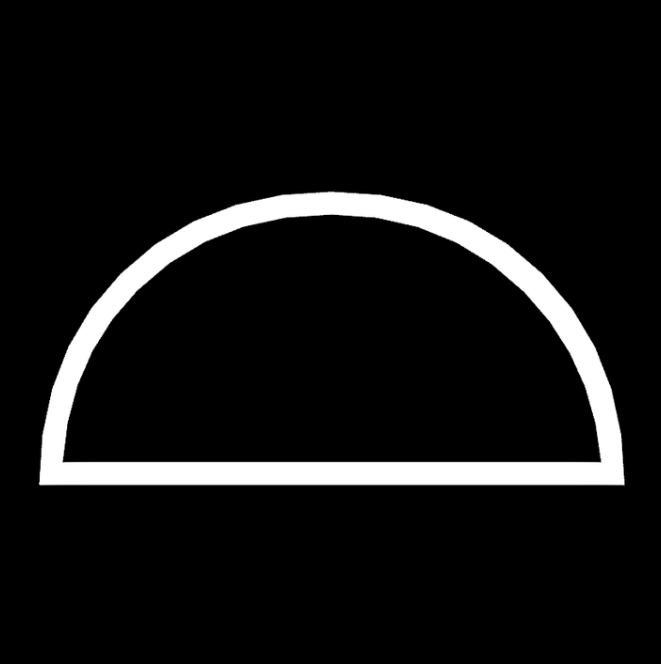
Surface profile controls how much an entire surface may deviate from its intended shape within a defined tolerance zone. It is commonly used for complex surfaces, aerodynamic shapes, and molded components.
ANGULARITY

Angularity controls the orientation of a surface or feature relative to a datum at a specified angle other than ninety degrees. It is commonly used where parts must align along precise angled surfaces.
COMMON MISTAKES
Even when engineers understand the mechanics of tolerances and fits, mistakes often occur when those tolerances are applied without considering how parts will actually be manufactured. Every manufacturing process has its own dimensional capabilities, limitations, and sources of variation. Machining, injection molding, sheet metal forming, and additive manufacturing all produce parts with different levels of precision and different types of dimensional behavior.
Designers who assign tolerances without understanding these process realities can easily create drawings that are unnecessarily expensive to produce, difficult to inspect, or incompatible with the chosen manufacturing method. A tolerance that is perfectly reasonable for a ground steel shaft may be completely unrealistic for a molded plastic part or a formed sheet metal component.
Effective tolerancing requires more than simply applying numbers to dimensions. It requires a clear understanding of how the part will be manufactured, how mating components interact in an assembly, and how dimensional variation will propagate through the design. Engineers who understand the capabilities of manufacturing processes are far better equipped to specify tolerances that balance function, cost, and manufacturability.
The mistakes below are among the most common issues encountered in real production environments and often stem from overlooking the relationship between design intent and manufacturing capability.
OVER
TOLERANCING
Specifying extremely tight tolerances across many features can significantly increase manufacturing cost and difficulty. Precision machining, grinding, and additional inspection may be required, even when the extra accuracy provides little benefit to the part’s function.
UNDER
TOLERANCING
Allowing excessive dimensional variation can create loose fits, misalignment, or poor mechanical performance. While looser tolerances reduce manufacturing cost, they must still maintain the functional requirements of the assembly.
PROCESS
IGNORANCE
Assigning tolerances without considering the capabilities of the chosen manufacturing process can create parts that are difficult or expensive to produce. Designers should understand realistic process limits before specifying tight dimensional requirements.
POOR
DATUM SELECTION
Incorrect or inconsistent datums can cause critical features to shift relative to each other during manufacturing and inspection. Proper datum selection ensures that important features remain aligned with the functional references of the part.
NON-CRITICAL
TOLERANCING
Not every dimension on a part needs tight control. Applying the same tolerance level to every feature increases manufacturing complexity without improving the performance of the product. Overcomplicated tolerancing on every non-critical feature increases cost greatly.
IGNORING
STACK-UP
Designing dimensions without considering how tolerances accumulate across multiple parts can lead to unexpected assembly issues. Even small variations can combine to create interference, gaps, or misalignment in finished assemblies.